What you are looking for
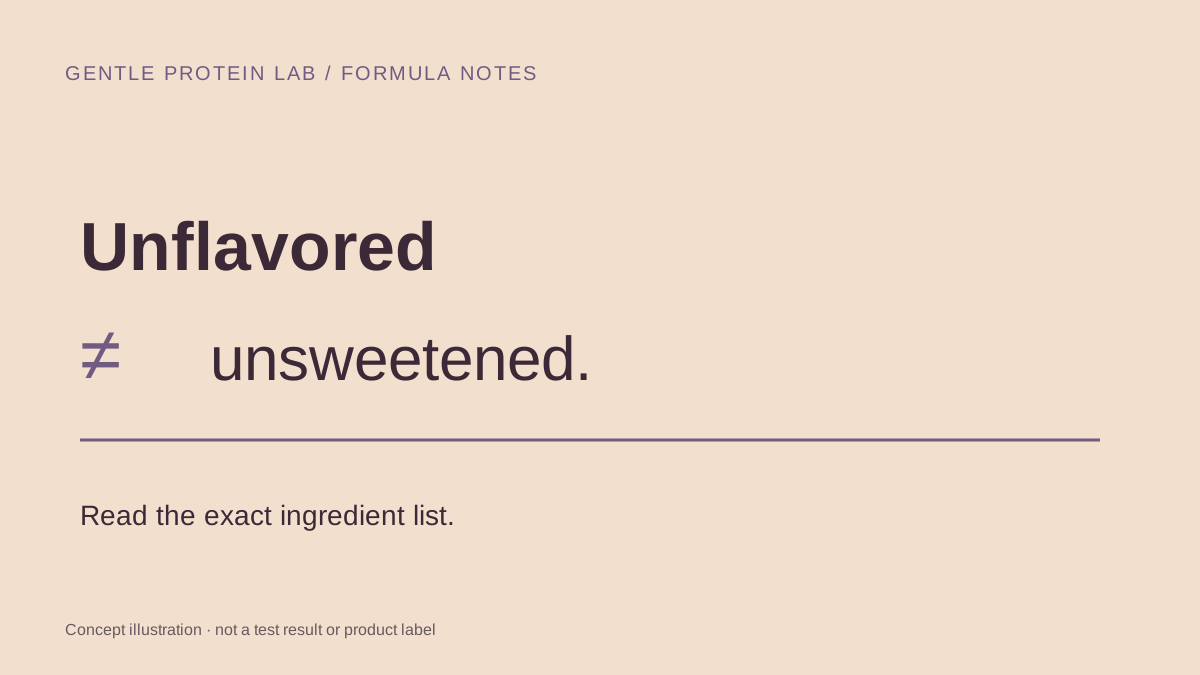
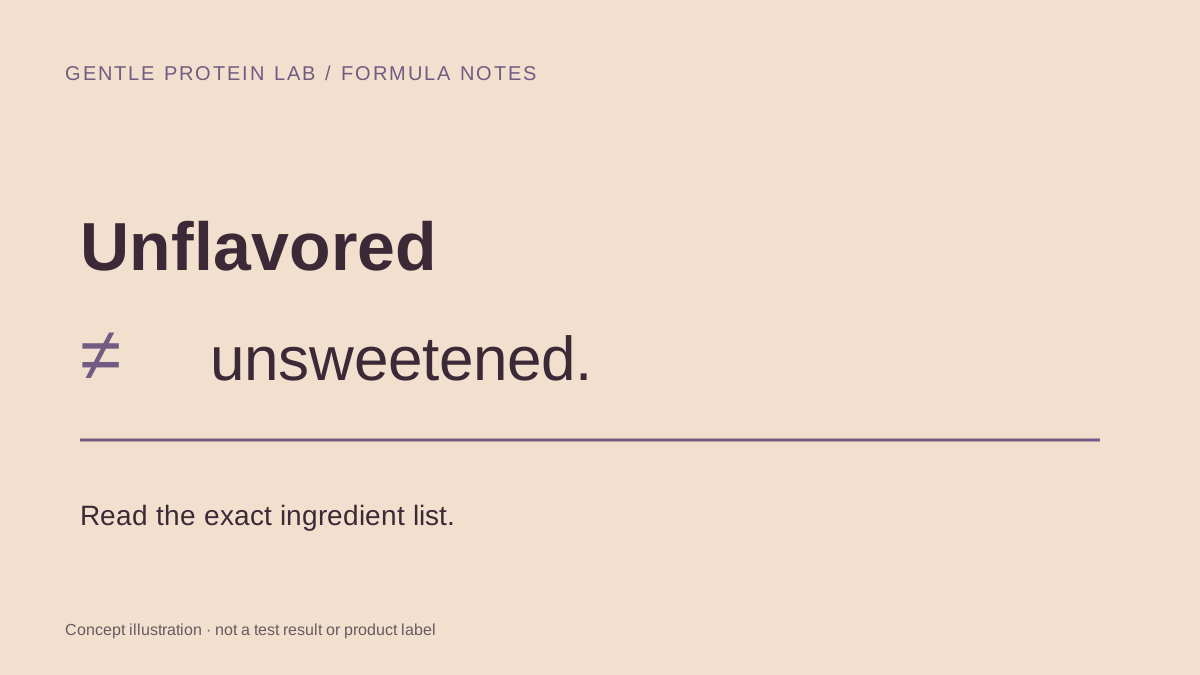
If the goal is no added sweetening ingredients, make that your actual filter. “Unflavored” describes a flavor presentation; it does not, by itself, settle the sweetener question. Similarly, a no-added-sugar statement does not describe every possible sweetening ingredient.
Build a two-column check
Record the flavor name in one column and the sweetening ingredients in another. Look for sugar ingredients, named sugar alcohols, stevia or monk fruit, and other named high-intensity sweeteners. A natural-origin claim is not the same as unsweetened.
Why exact versions matter
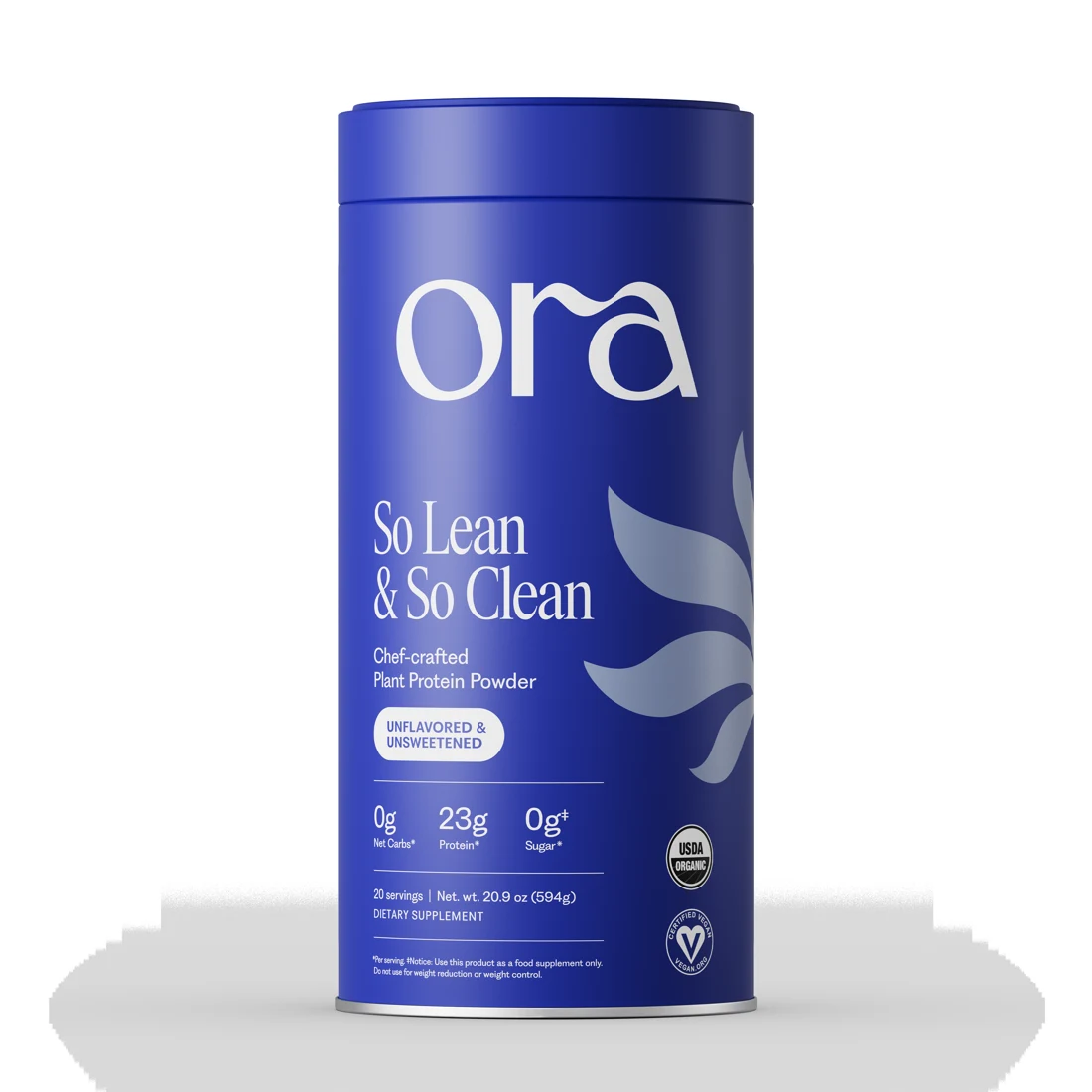
The same product family may offer regular flavored, unsweetened flavored and unflavored versions. Do not apply the ingredients from one to another. Ora, for example, lists an Unsweetened & Unflavored option separately from its other versions; it is the version name and current label together that matter.
Choose by use, not an imagined taste test
For a recipe where you want control over sweetness, an unsweetened formula can be a useful category to compare. That is a functional use case, not a claim that the powder tastes neutral or that we have tried it. Source ingredients may still have their own flavor.
A buying checklist
Before buying, confirm the exact option, full ingredient list, serving information and ingredient restrictions. In our product index, “sweetener information varies by flavor” is intentionally not converted into a blanket unsweetened badge.
Sources & scope
Sources checked November 5, 2026. Product formulas and packaging can change. This page is educational, not individualized medical advice.