Make the distinction first
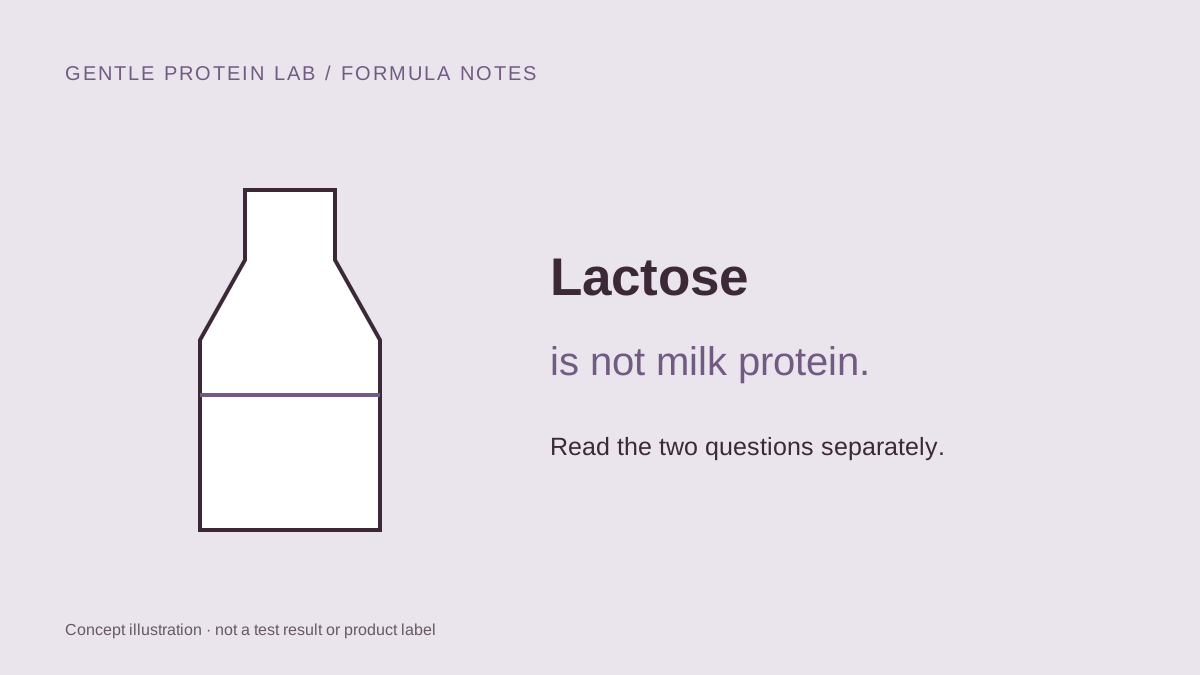
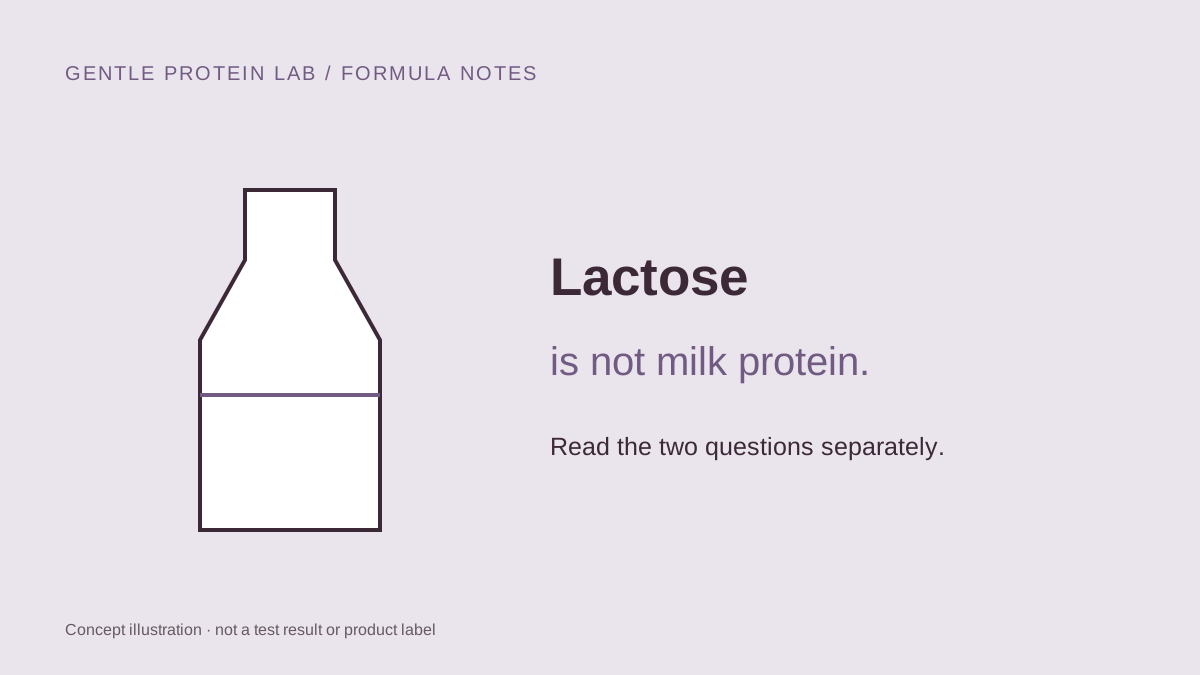
Lactose is a milk sugar. Whey and casein are milk proteins. A powder may make a lactose-free claim while still containing milk protein, so that claim alone is not a basis for choosing a product for milk allergy.
Check the exact product claim
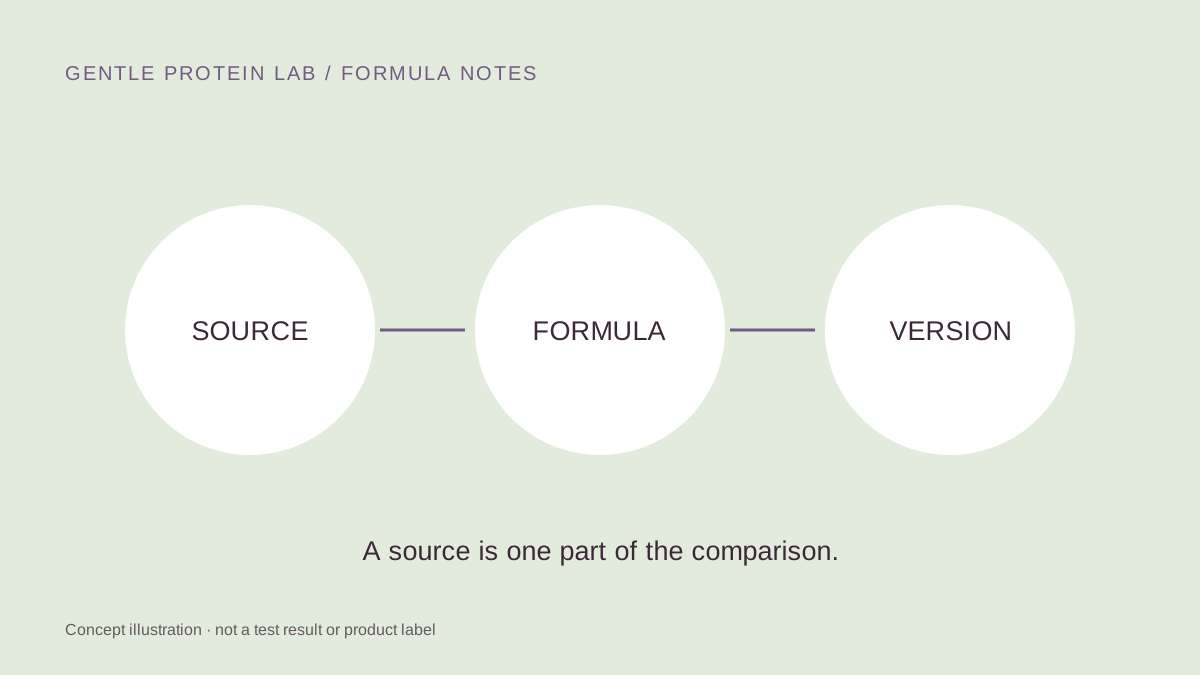
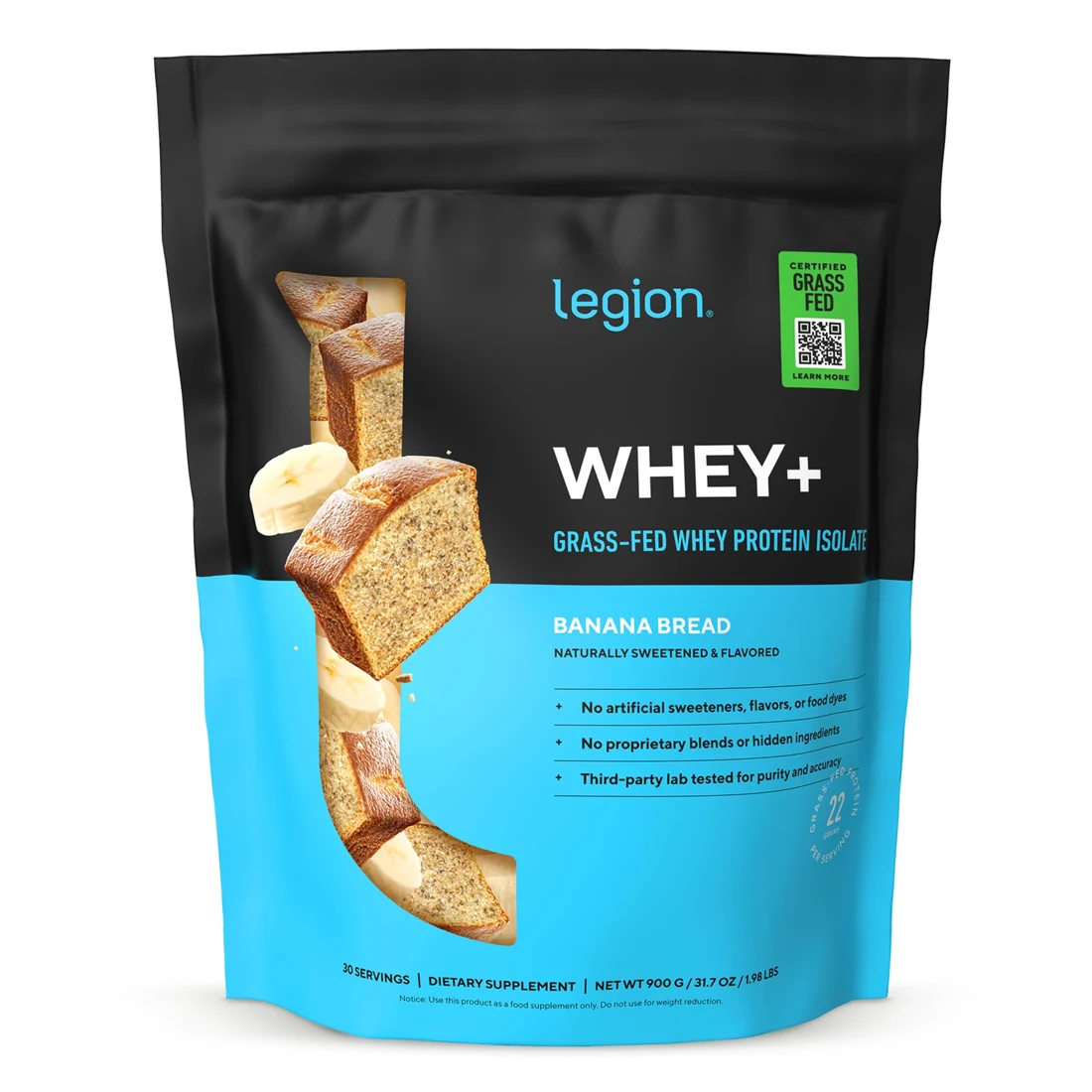
Use the label for the specific formula, not a statement about the brand as a whole. Look for a clear lactose statement and separately read the ingredients and allergen information. “Whey isolate” tells you the protein category; it is not an independent measurement of the lactose in the tub you are buying.
Compare your two routes
One route is a milk-derived powder with suitable product-specific lactose information. Another is a non-whey protein. A plant formula changes the protein source but may introduce different flavorings, sweeteners or fiber. Compare the whole list rather than assuming that source alone predicts how it will feel.
Ask a precise question when information is missing
Ask the manufacturer about the exact flavor and market: does this version carry a lactose-free claim, and what is that claim based on? If the answer is unavailable, keep that fact unknown. Do not turn “not mentioned” into “absent.”
Match your mixing liquid
A powder and the drink you make from it are separate comparisons. If the drink includes milk, record that separately. Readers with milk allergy should follow their allergy-care advice rather than relying on lactose-oriented shopping filters.
Sources & scope
Sources checked November 5, 2026. Product formulas and packaging can change. This page is educational, not individualized medical advice.